

 Deutsch
Traffic
Traffic and Jams
How traffic comes about, how to find jams on the heatmap and what helps commuters and emergency vehicles get through.
Bus driver
The cars in your city do not drive at random. In the morning people go from home to work, in the evening back again, at midday to the shops, and in the morning trucks supply the industry. On top of that comes through traffic on the highway. Where many routes meet, things get tight.
The heatmap
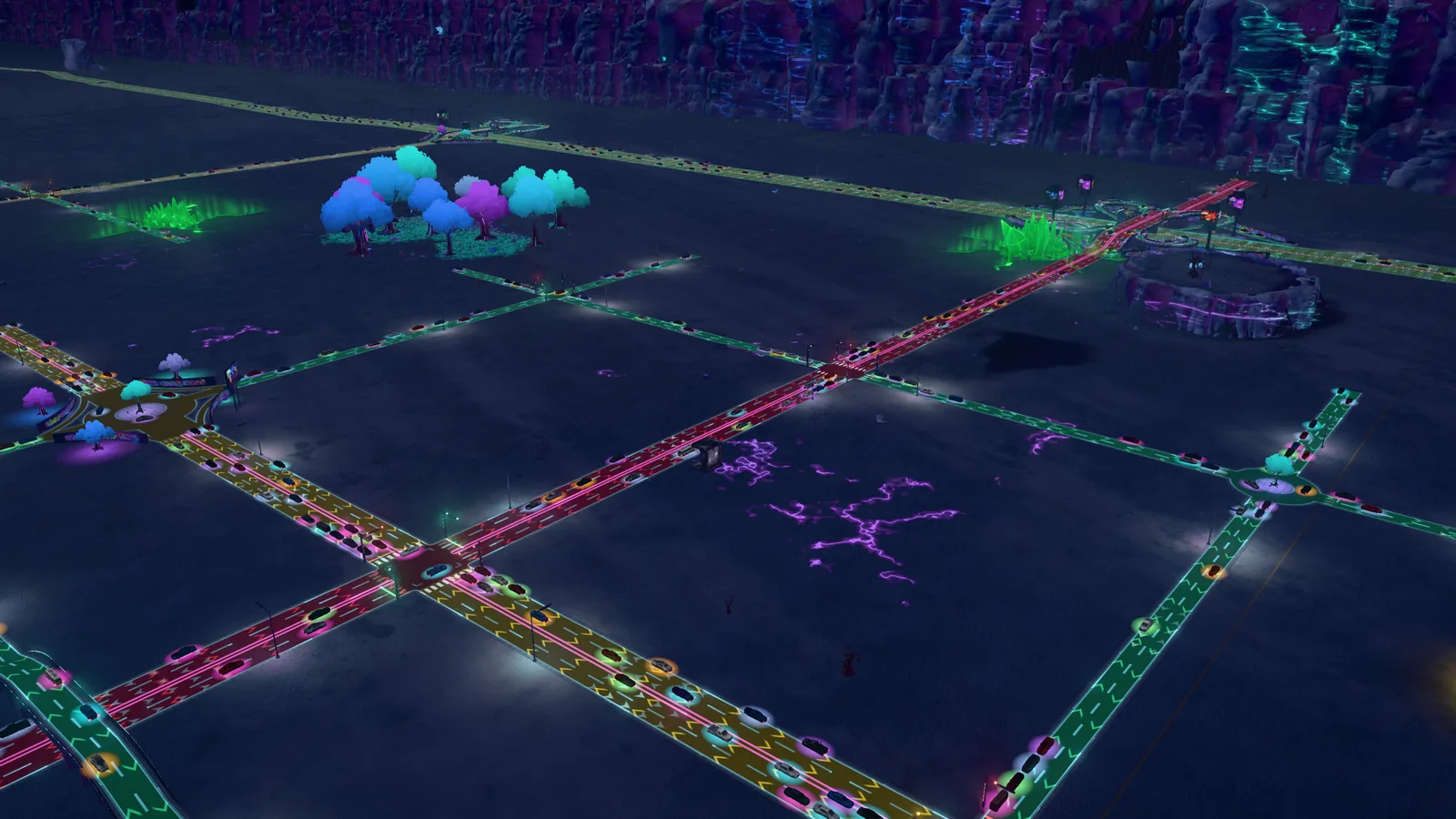
The Traffic button at the top left colors the roads by load:
| Color | Meaning |
|---|---|
| Green | free |
| Yellow | dense |
| Red | jam |
Little arrows on the lanes show how fast traffic flows. The legend names the three busiest spots in the city, one click flies the camera there.
Why jams matter
- Commuters: jams on the way to work lower the district value and make people discontent (Commuting and the Way to Work).
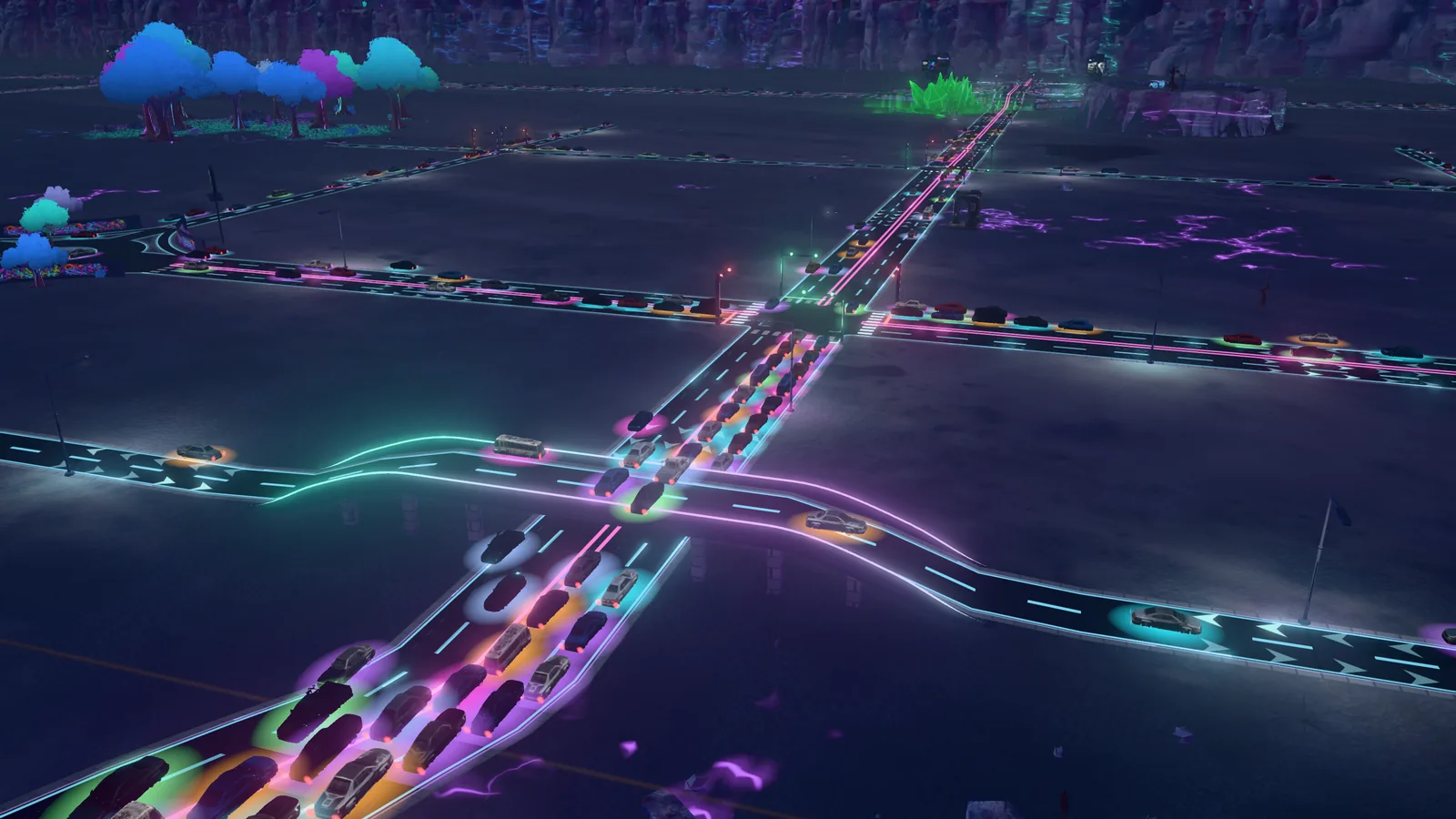
- Emergency vehicles: fire trucks and ambulances weave through with sirens on, but are slower in a jam. If they arrive too late, protection suffers in the whole area (Fire Department).
What helps
- Wide roads on the main axes (Roads)
- Second routes: a single bridge or access road becomes a bottleneck. Give traffic alternatives.
- Cloverleaf interchanges at the highway instead of traffic lights (Highway Interchange)
- Bridges over main axes where a side street only needs to cross (Bridges)
- Roundabouts at medium junctions (Roundabout)
- Buses in residential areas (Buses and Bus Stops)
- Shorter trips: plan work, trade and housing sensibly side by side